


By the Handmade Concreting team, Perth concreters with 10+ years of local experience. Last updated June 2026.
For most residential projects in Perth, a concrete slab should be 100mm thick for driveways , 85-100mm for shed pads , and 75-100mm for patios , depending on load and subbase conditions. Getting the thickness wrong is one of the most common reasons slabs crack or fail early. Handmade Concreting aim for 100mm thickness everywhere to maintain consistent and strong finishes for our customers.
At Handmade Concreting, we get asked this question on almost every quote we do across Perth. Slab thickness is not a one-size-fits-all answer. It depends on what the slab needs to carry, what's underneath it, and how your soil behaves. We have been pouring concrete across Perth for over 10 years, and the detail we put into getting this right is what separates a slab that lasts 30 years from one that cracks in five.
Why Does Slab Thickness Matter So Much for Perth Homes?
Slab thickness is the single most important structural decision you make before any concrete is poured. In Perth, the wrong thickness on the wrong soil is a recipe for cracking, settling and costly repairs down the track.
Perth sits on some of the most variable soils in Australia. Across the northern suburbs, where we work out of Beldon every day, we regularly encounter Bassendean sands, deep, loose, highly permeable profiles that drain fast but offer very little natural bearing capacity. In newer estates further north toward Alkimos and Eglinton, the profile can shift to harder, more reactive ground. Further south toward the older coastal suburbs, you hit the Spearwood sand system, which behaves differently again.
Why does this matter for thickness? Because a slab on weak, sandy ground is carrying its load with less support from below. That means the concrete itself has to do more structural work. A 75mm slab that might be perfectly fine on compacted limestone fill could fail within a few years on loose Bassendean sand without proper sub-base preparation and the right thickness.
Perth's climate adds another layer of complexity. Our dry summers and wet winters create seasonal soil movement, especially in clay-containing profiles. Concrete expands and contracts with temperature changes too. A slab that is too thin will flex under load and eventually crack. We have seen plenty of driveways poured by others at 75mm that looked fine at handover and were cracking within two to three summers.
The Australian Standard for unreinforced concrete paths is a minimum of 75mm, but for anything that takes vehicle loads or heavy foot traffic, 100mm is the practical minimum we recommend every time.
What Thickness Does Handmade Concreting Specify for Each Application?
For driveways, we pour at 100mm minimum with steel reinforcement. For shed pads, 85-100mm depending on what's going in the shed. For residential patios and alfresco areas, 75-100mm based on soil conditions and whether vehicles will ever access the area.
Here is how we break it down by application:
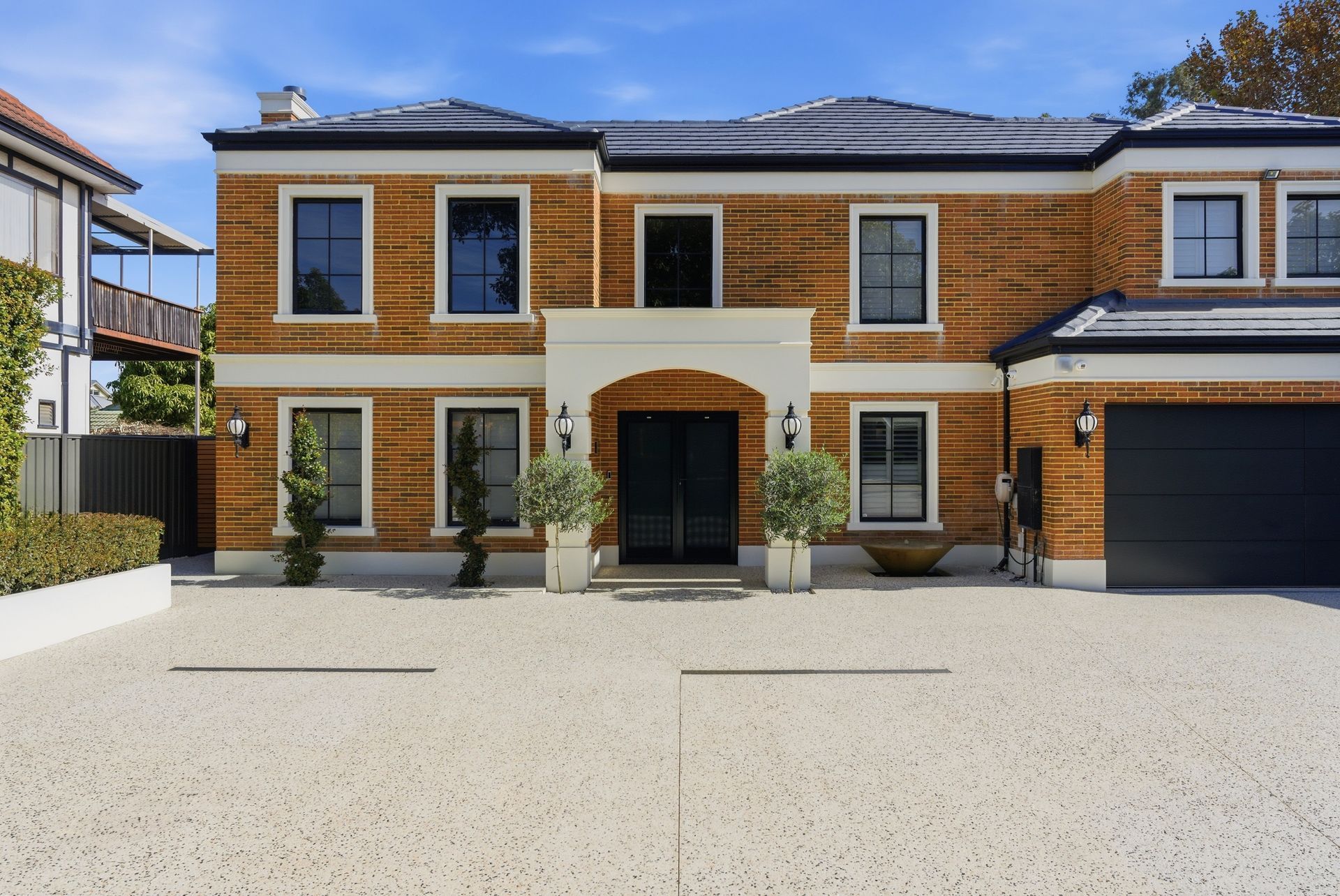
- Driveways: 100mm minimum, always steel reinforced with SL72 mesh on chairs to hold the steel at the correct mid-depth position. Our driveway pricing includes steel reinforcement, mesh and chairs as standard. A 60m² driveway in standard grey concrete runs approximately $5,400-$6,000, with exposed aggregate at $8,100-$8,700 for the same area. These figures exclude earthworks and sealing, which we quote separately.
- Shed pads: 85-100mm, thicker if a heavy vehicle like a boat or caravan will be stored inside. We assess the subbase and compact to a minimum standard before forming up. See our concrete shed pads page for more detail on what this involves.
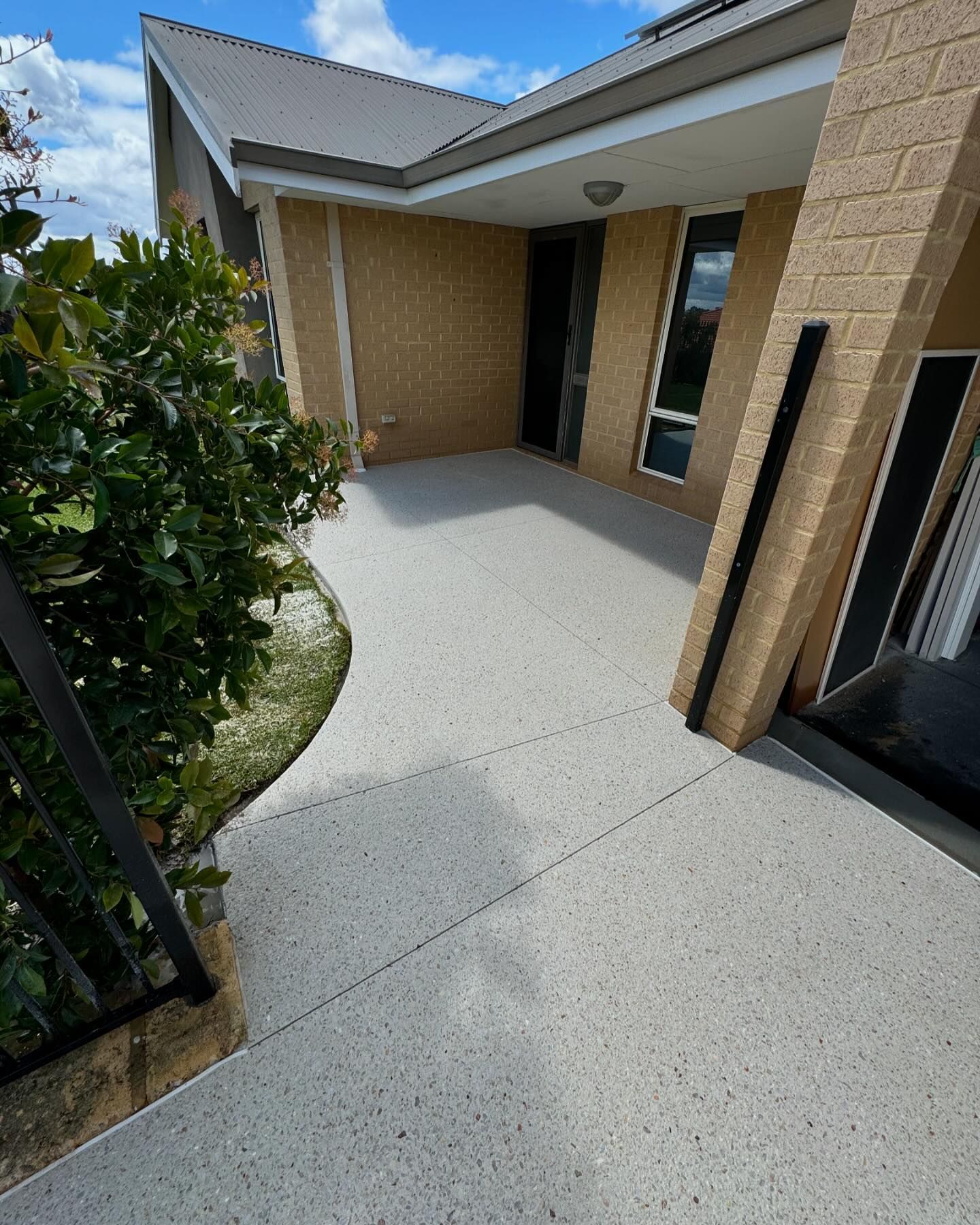
- Patios and alfresco: 75mm is the minimum, but we typically pour at 85-100mm in Perth's sandy soils because it gives far better long-term performance. A thicker patio slab also takes edge loads better when pot plants, outdoor furniture and built-in barbecues are positioned around the perimeter.
- Paths: 75mm for pedestrian paths on well-compacted ground. If a wheelbarrow or ride-on mower will use the path regularly, we go to 85mm.
We source our concrete through Limecrete , our preferred supplier, which means we get consistent mix quality and slump on every pour. The mix design matters as much as the thickness. We specify a 25MPa mix as standard for residential slabs, stepping up to 32MPa for heavier commercial applications.
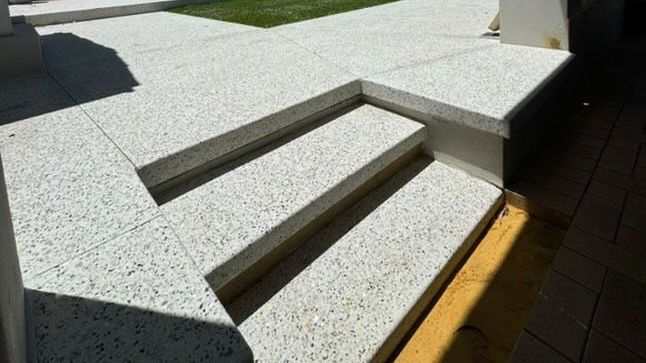
For patios and driveways, we can also help you choose the right finish. Our concrete driveways page covers finish options in detail if you want to compare exposed aggregate, honed and coloured concrete before getting a quote.
What Is the Step-by-Step Process We Follow to Get Slab Thickness Right?
Getting slab thickness right is not just about the concrete itself. The preparation underneath the slab is equally important. A 100mm slab on poorly prepared ground will still fail. Our process ensures both work together.
Here is exactly how we approach it on a typical Perth residential project:
- Site assessment: We walk the site and assess soil type, existing levels and drainage. On the sandy profiles common around Beldon, Heathridge and Joondalup, we check for any soft spots or filled ground that needs extra attention.
- Earthworks and sub-base preparation: We excavate to the correct depth to allow for the slab thickness plus any base material. We compact the sub-base to a firm, even surface. If the soil is very loose, we sometimes bring in compacted road base for additional support before pouring.
- Formwork: We set timber or steel formwork to the exact height that gives us the specified slab thickness. This is where the thickness is locked in. Getting the formwork level and at the right height is non-negotiable.
- Reinforcement placement: SL72 mesh is placed on bar chairs to sit at the correct depth within the slab, typically at mid-depth or slightly below for a 100mm pour. Steel at the wrong height does very little. We check this before the truck arrives.
- Concrete pour and finishing: We pour, screed and finish to the specified level. We check thickness at multiple points as we go. Any voids are worked out with a vibrator.
- Curing: Concrete reaches 70% of its design strength at 7 days and full strength at 28 days. We apply a curing compound or cover with plastic on hot days to prevent rapid moisture loss, which causes surface cracking.
On one recent job in Edgewater, we found a section of the existing ground had been backfilled with loose garden soil from a previous landscaping job. It was invisible from the surface. We excavated it out and replaced it with compacted road base before pouring. That kind of on-site judgment is what years of experience gives you.
How Do You Know If Your Sub-Base Is Adequate Before Pouring?
A solid sub-base means you can walk across it without your feet sinking in, and a plate compactor run over the surface leaves no visible movement. If the ground is soft, springy or recently disturbed, it needs more work before any concrete goes down.
This is the part of the job that homeowners rarely see, but it has the biggest impact on how long the slab lasts. In Perth's sandy northern suburbs, the sub-base almost always needs compaction work. The natural sand profiles drain well, which is a positive, but they offer low bearing capacity without compaction.
Signs that a sub-base is not ready include:
- Visible footprints or tyre tracks that do not spring back
- Any recently disturbed or filled ground
- Low-lying areas where water pools after rain
- Tree root zones where roots have been removed
When we assess a site and the sub-base is not right, we say so. We would rather have that conversation before the pour than explain a cracked slab after it. Transparent advice is just how we operate.
For projects involving retaining walls adjacent to a new slab, it is worth reading our Concrete Retaining Walls Perth: Design, Options and Cost Guide as the two elements need to be designed together.
Why Perth Homeowners Choose Handmade Concreting
Handmade Concreting has been operating out of Beldon in Perth's northern suburbs for over 10 years. We are fully licensed and insured, and we carry a consistent 5-star Google rating from homeowners across Perth who valued straight answers and quality work.
We use Limecrete as our preferred concrete supplier for mix consistency and reliability on every pour. We specify the right thickness for your specific application and soil conditions, not a generic number. Our team has poured hundreds of driveways, shed pads and patios across suburbs from Joondalup to Scarborough, and we know exactly what Perth's soils demand.
When you call us, you get honest advice, real pricing and a team that backs its work. That is the reason our customers refer us to their neighbours.
Frequently Asked Questions
How much does a concrete slab typically cost in Perth?
In Perth in 2026, a standard grey concrete slab costs $90-$100 per m², coloured concrete runs $100-$110/m², exposed aggregate is $135-$145/m², and honed concrete sits at $185-$195/m². For a typical 60m² driveway, that translates to roughly $5,400-$6,000 for standard grey and $8,100-$8,700 for exposed aggregate, excluding earthworks and sealing. Shed pads and patios are priced similarly by area.
How long does a concrete slab take from pour to full use?
You can walk on a freshly poured concrete slab after approximately 24-48 hours. Light foot traffic is fine at 3 days, but you should keep vehicles off a new driveway slab for a minimum of 7 days, and ideally 14 days in cooler winter conditions. Full 28-day curing is when the concrete reaches its design strength, so avoid parking heavy vehicles or placing concentrated loads before that point if you can help it.
Can a concrete slab be poured on sandy soil like we have in Perth's northern suburbs?
Yes, and it is done successfully every day across suburbs like Beldon, Joondalup and Heathridge. The key is correct sub-base compaction before any concrete is poured. Bassendean sand, which is common through Perth's northern coastal strip, has low natural bearing capacity, so we always compact the sub-base thoroughly and sometimes bring in road base material on particularly loose profiles. A properly prepared sandy sub-base performs well under a correctly reinforced 100mm slab.
Does Handmade Concreting use quality concrete and materials?
We source all our concrete through Limecrete, our preferred Perth supplier, which gives us consistent mix quality and the right slump for each application. We specify 25MPa as a minimum for residential slabs and use SL72 mesh on chairs for all reinforced pours. Handmade Concreting is fully licensed and insured, and we have maintained a 5-star Google rating across 10 years of Perth work by holding these standards on every job.
Do I need council approval before pouring a concrete driveway or shed slab in Perth?
For most standard driveways and shed slabs in Perth, you do not need a full building permit, but you may need a crossover permit from your local council or the City of Joondalup if the driveway connects to a council-controlled verge. Larger shed pads over a certain area may trigger a permit requirement under the Residential Design Codes. We recommend checking with your local council before work starts, and we are happy to advise on what applies based on your specific address and project scope.
Ready to get the thickness right from the start? Call Handmade Concreting on 0407 255 644 or send us your project details online for a straight-talking quote with no obligation. We service all of Perth from our Beldon base and will tell you exactly what your slab needs before a dollar is spent.
Request
A Free Quote
Submit your request and we'll get back to you soon to organise a quote!